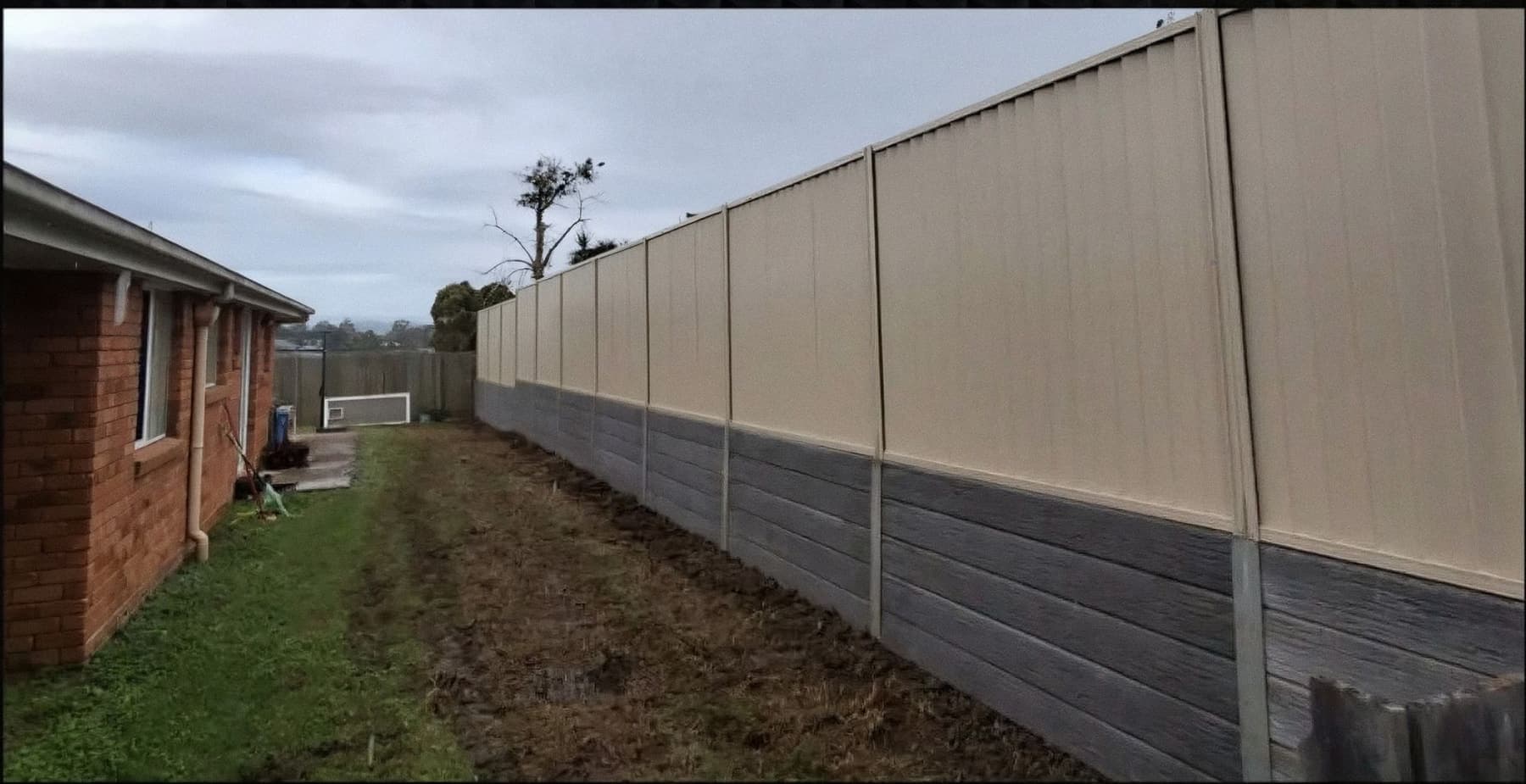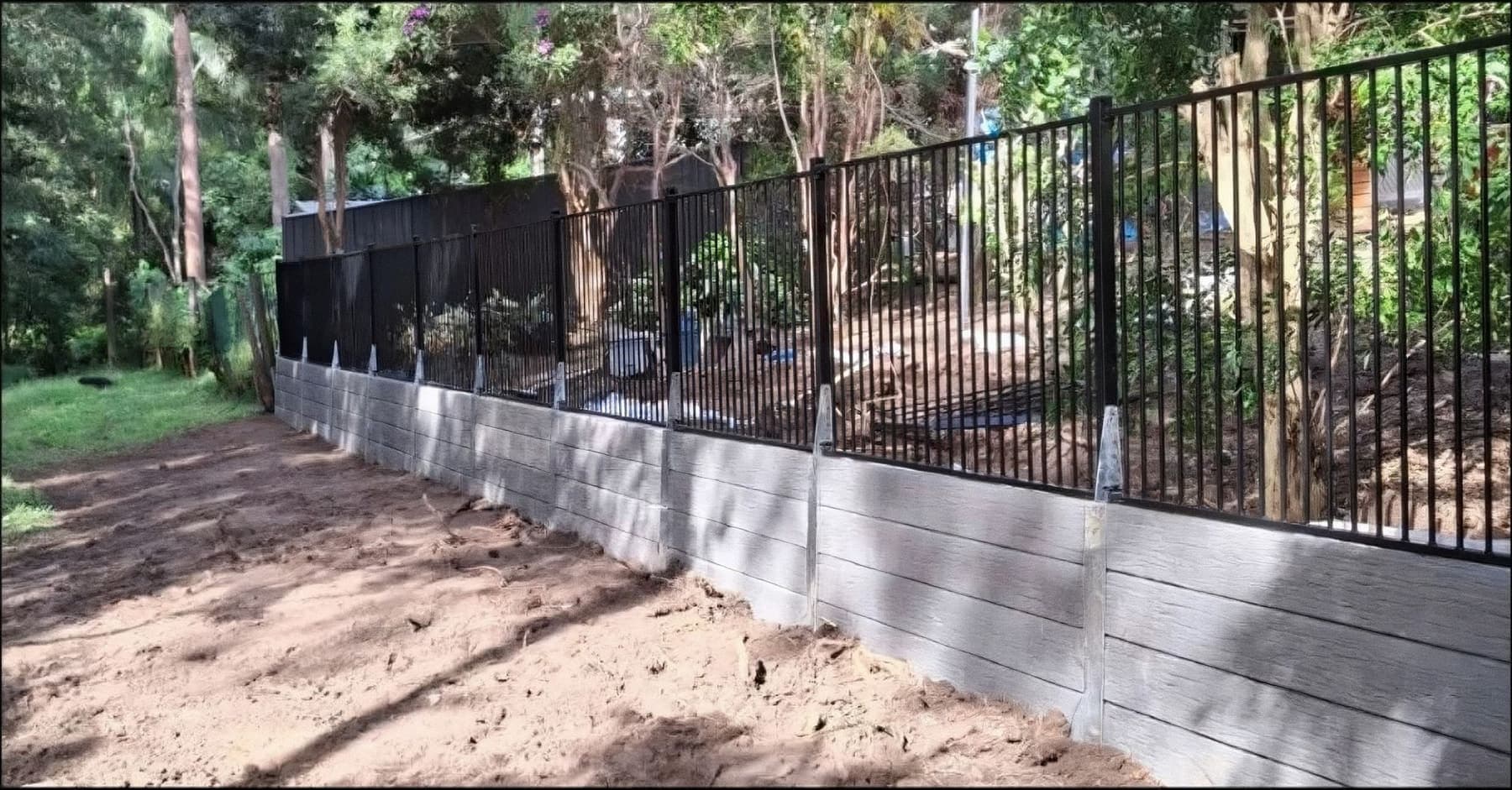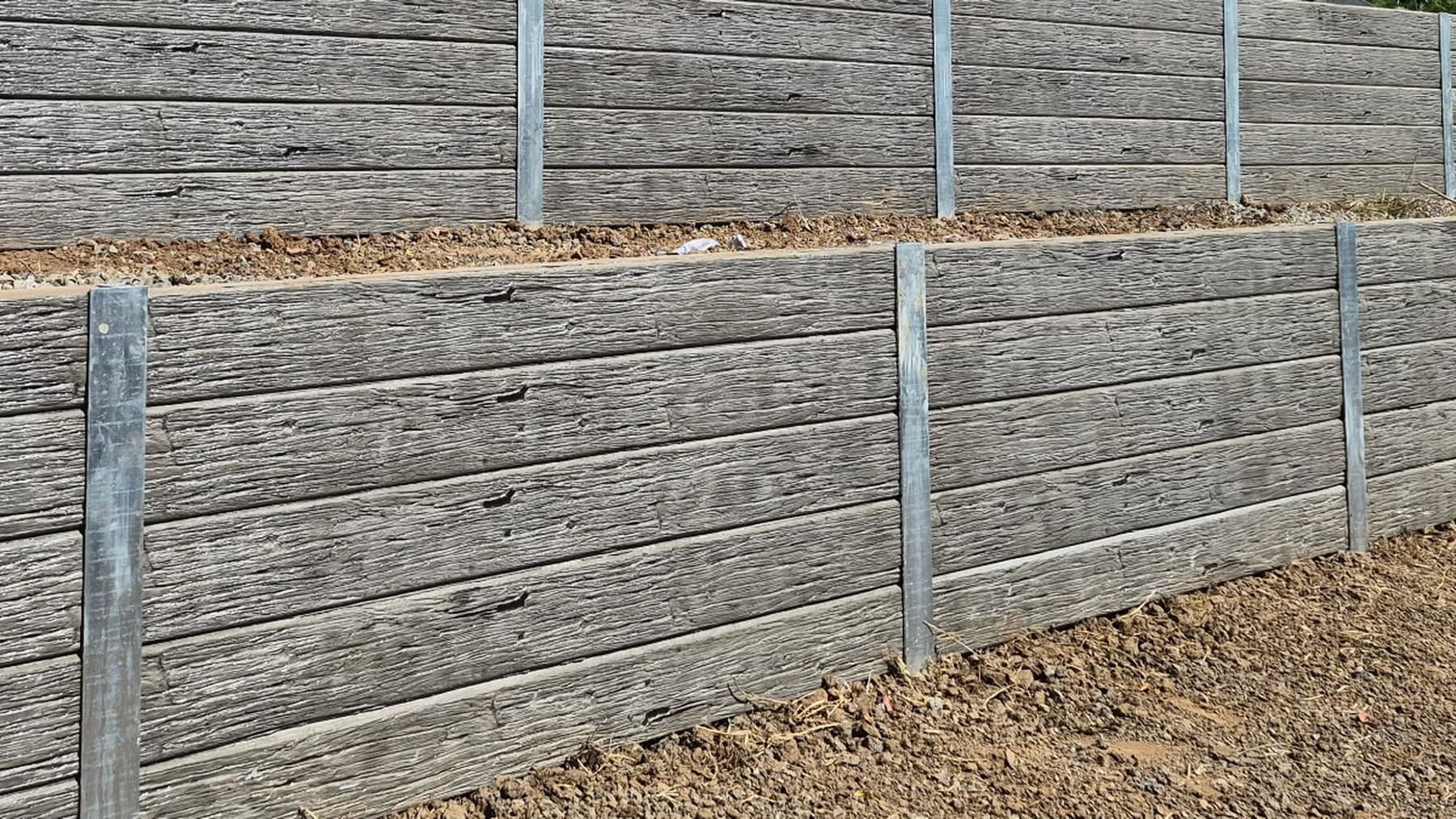
Material

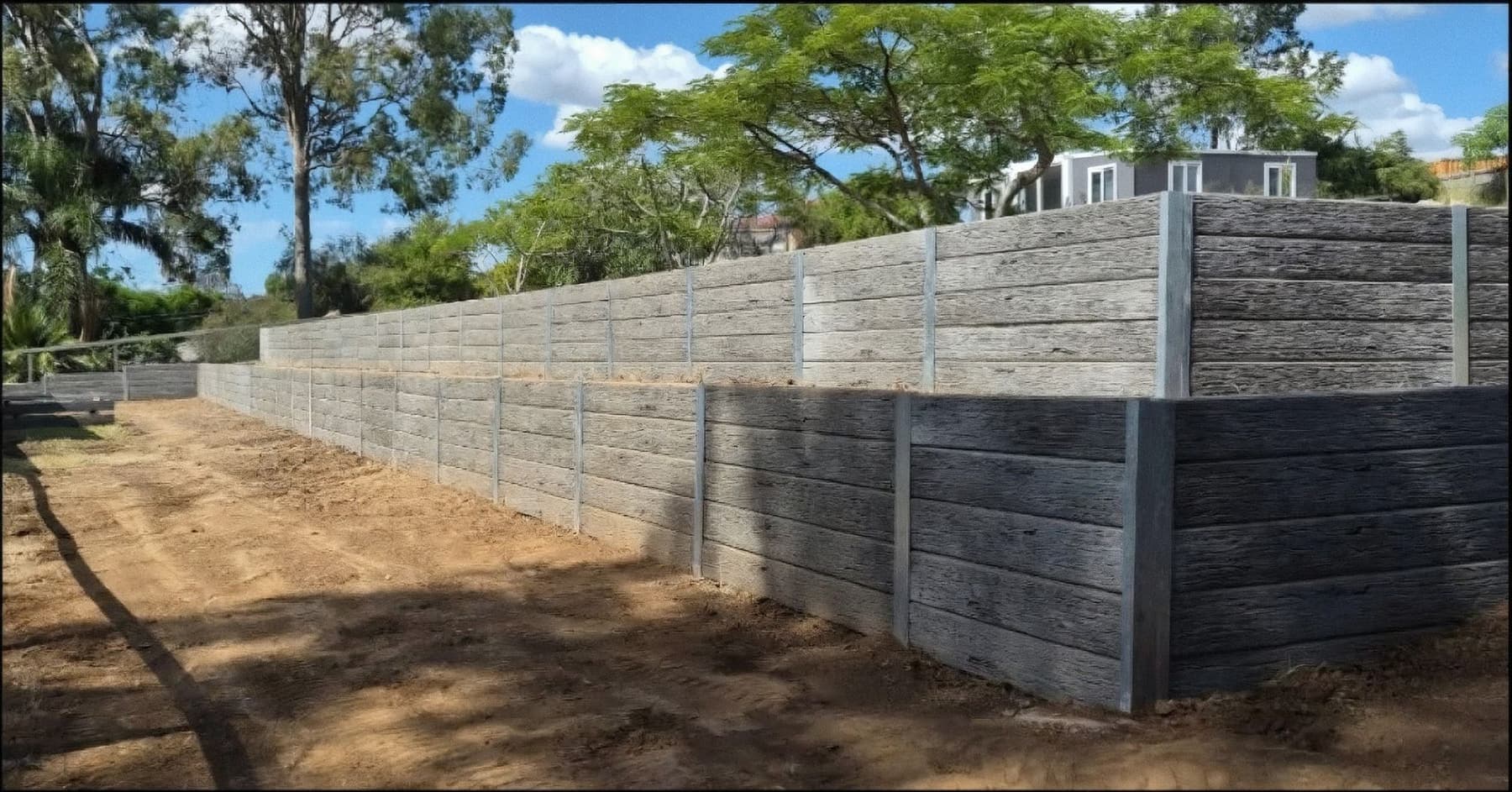
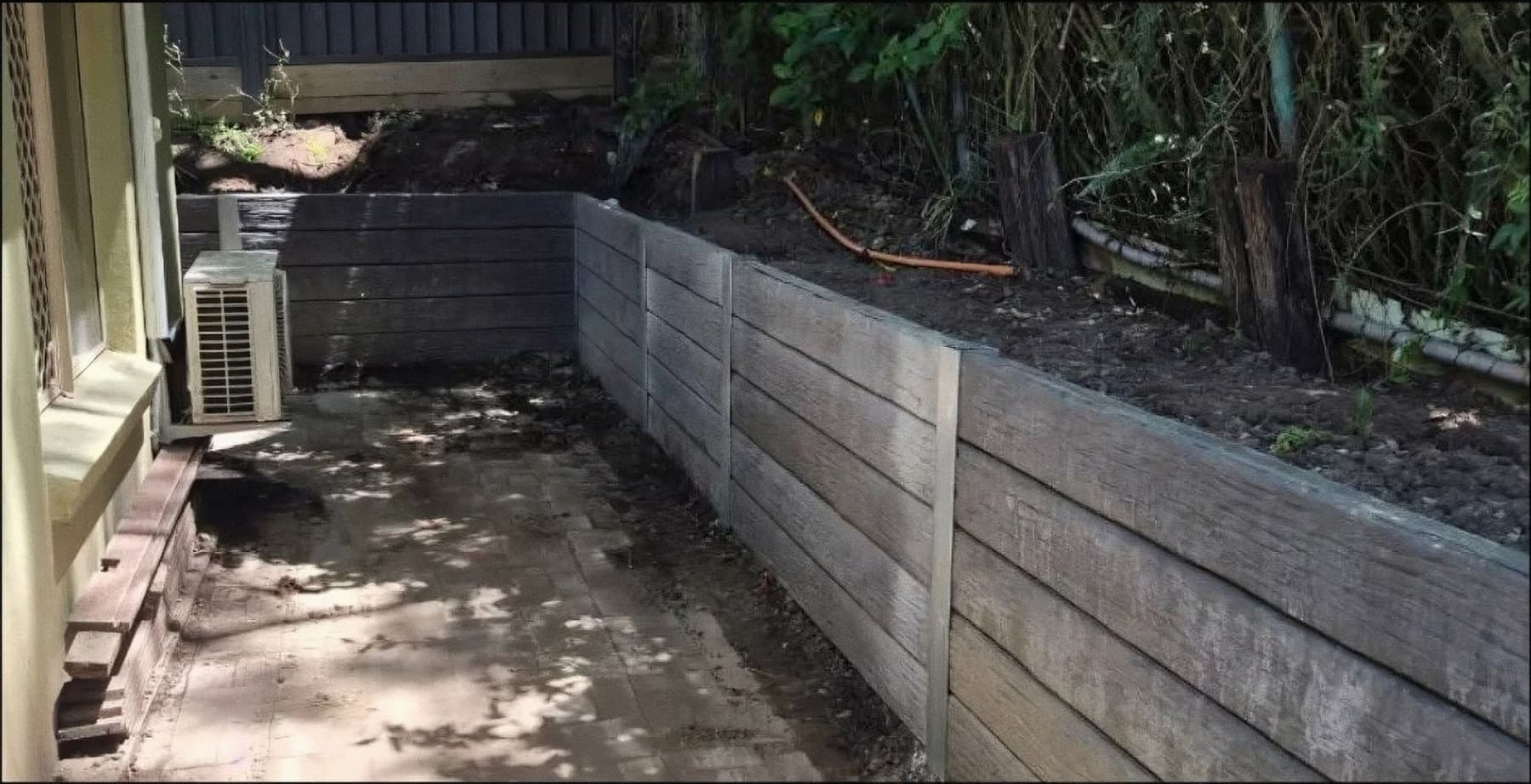
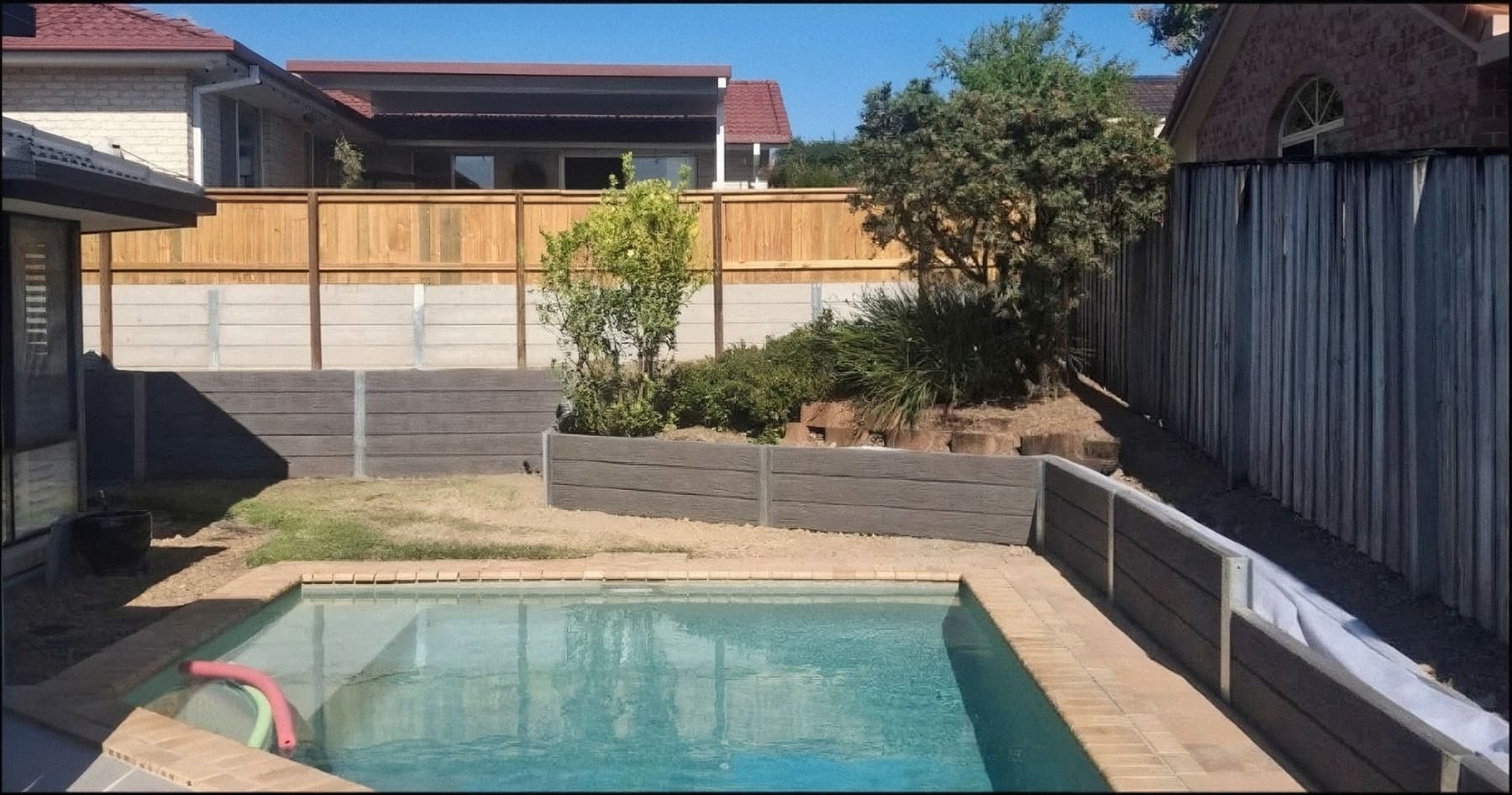
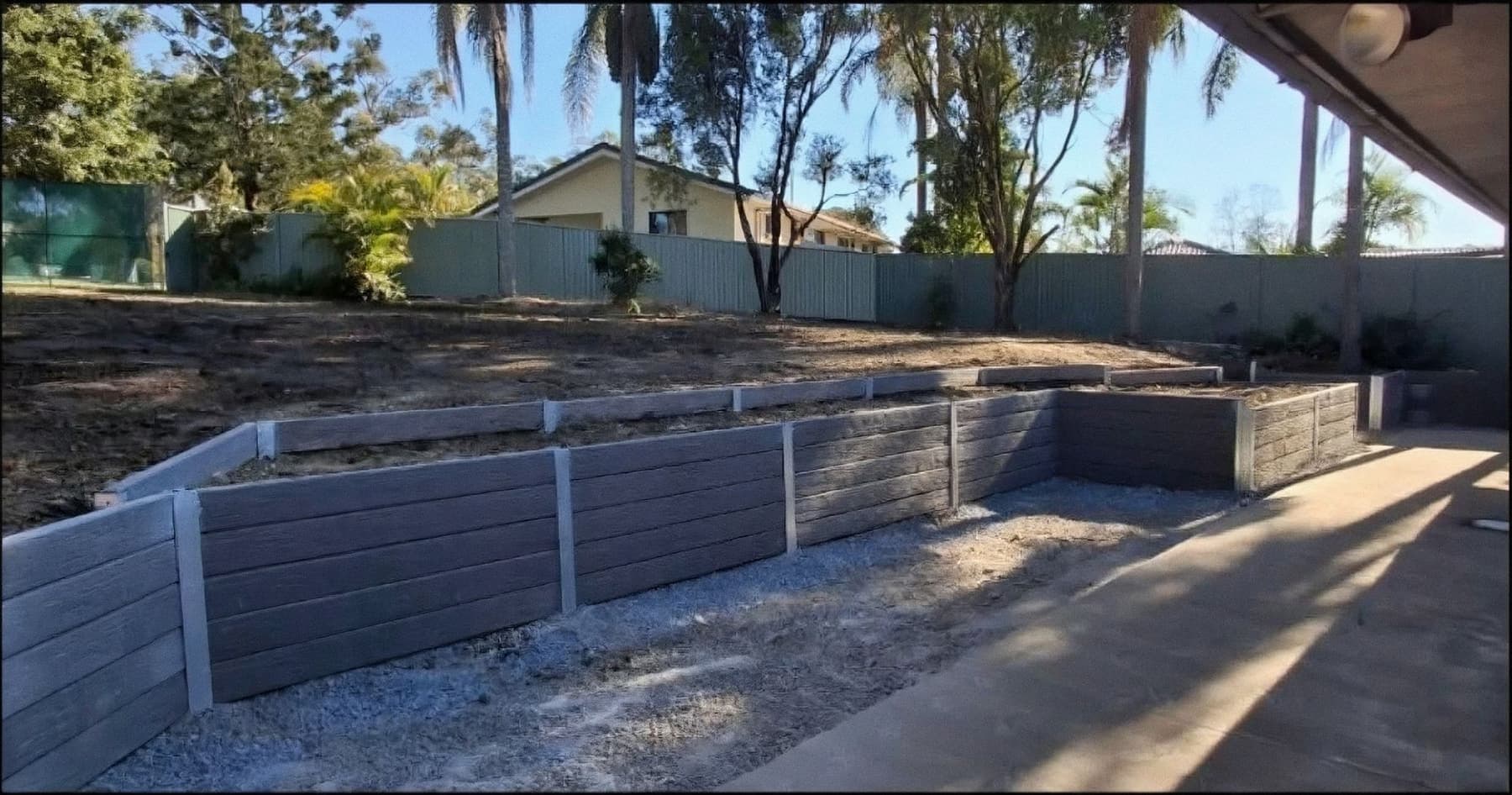
A retaining wall is, first of all, a material problem. Cement, sand, aggregate and steel, set into ground that moves with the seasons and fills with water every summer. What holds the bank isn’t the face you can see. It’s the post depth, the reinforcement, and the space behind the wall where the water is supposed to go.
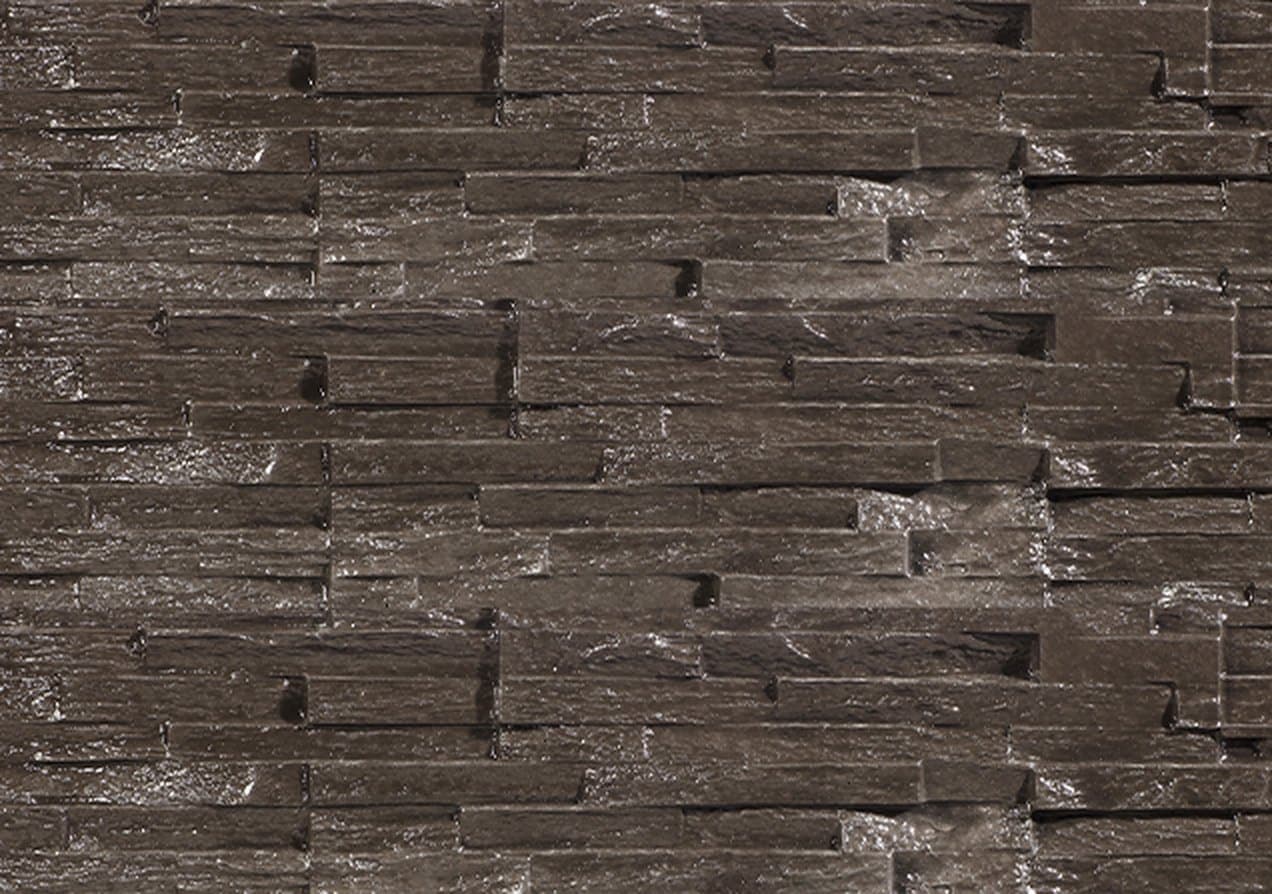
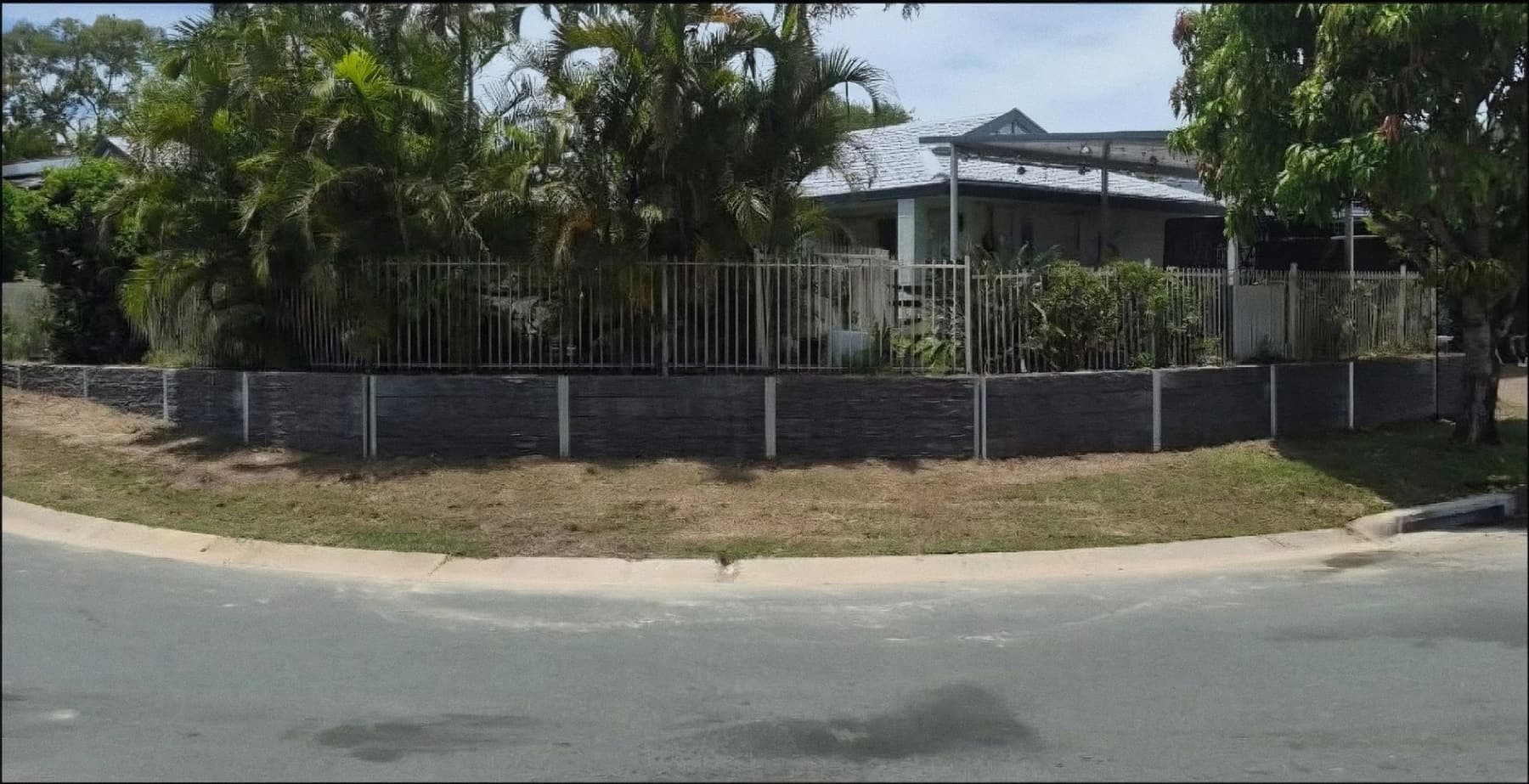
Steel reinforced concrete from a trusted supplier, with a 50 year warranty on the sleeper.
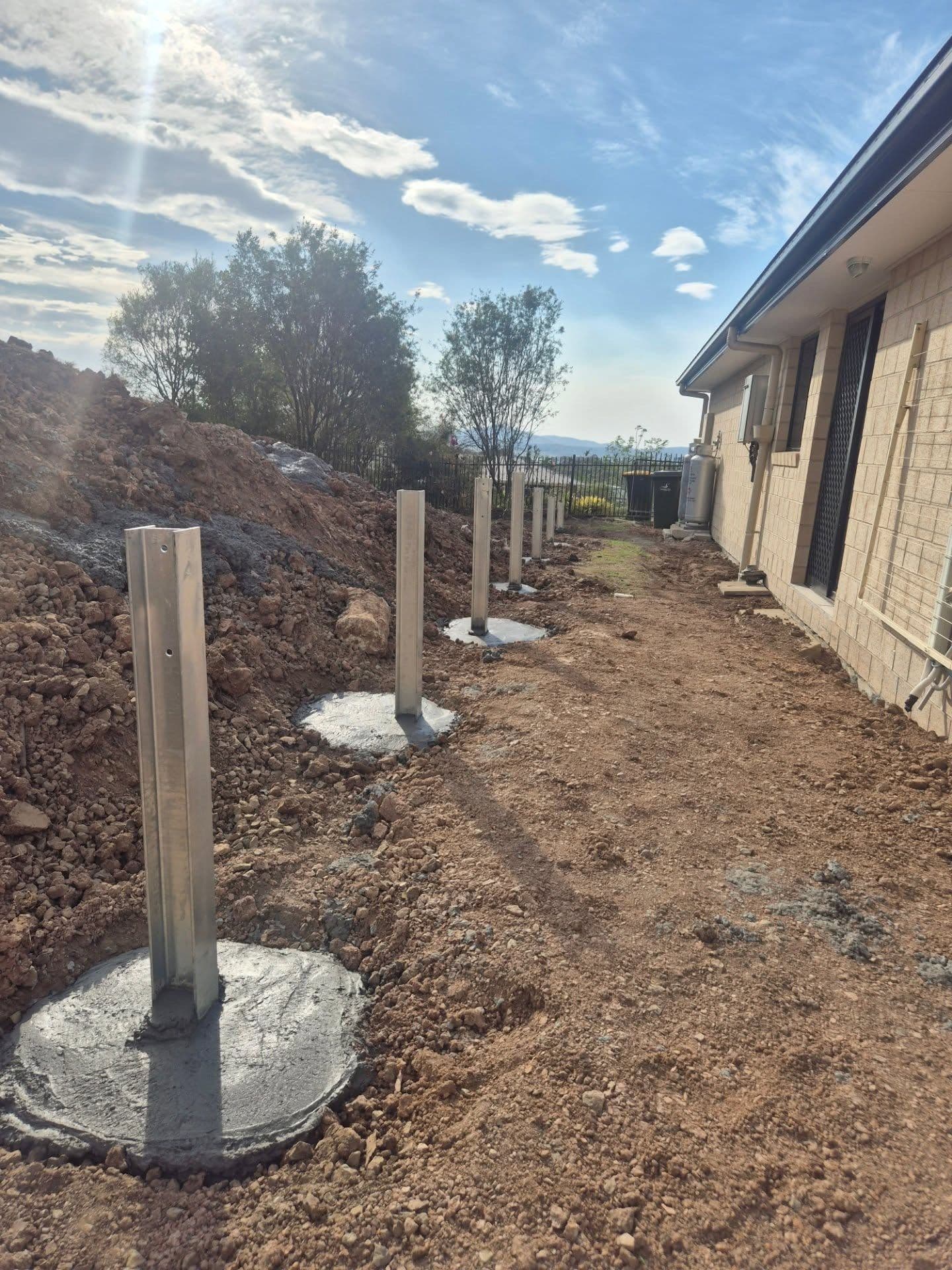
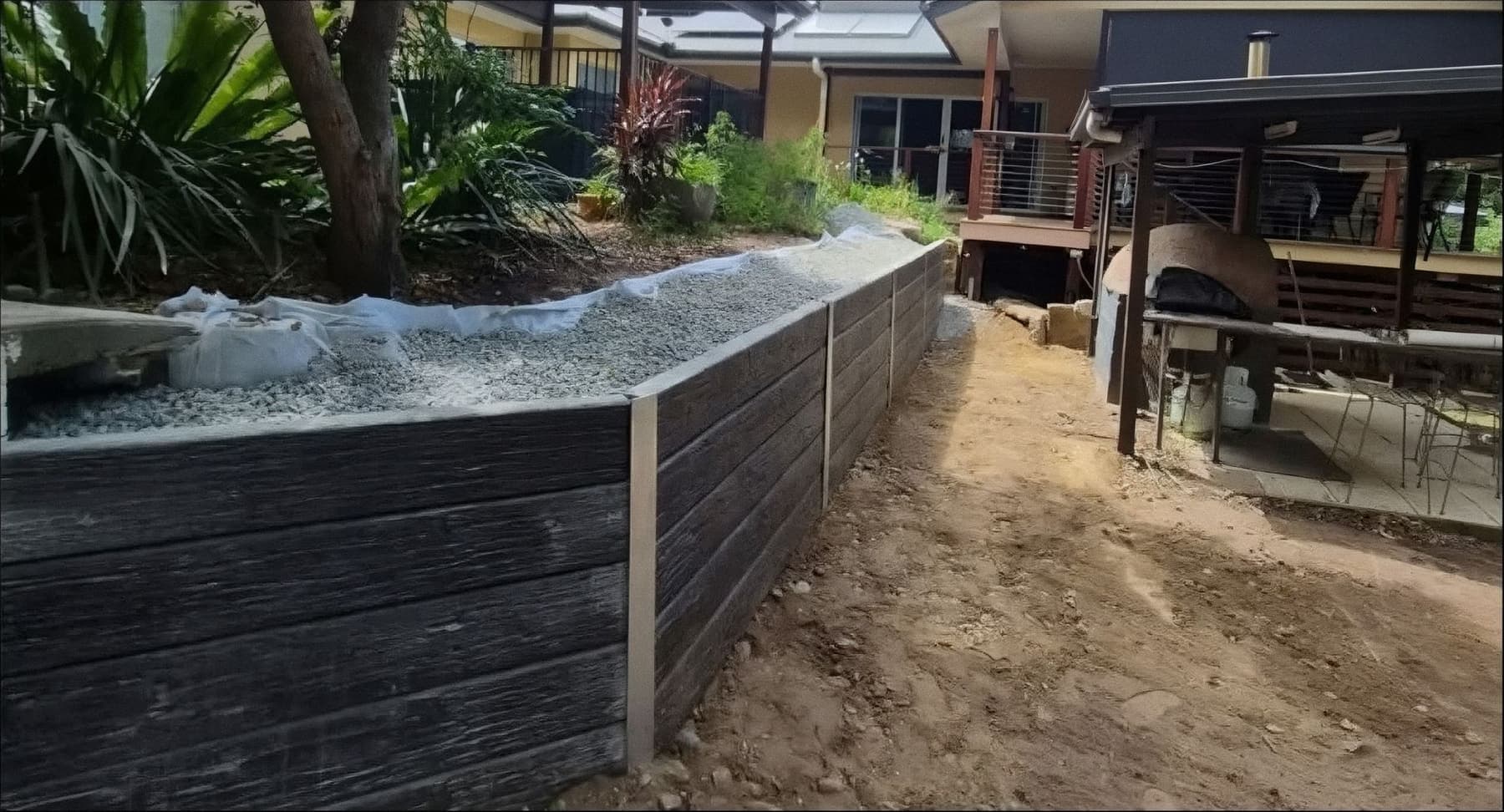
Galvanised steel in 450 mm pier holes, concreted with 32 MPa concrete from the plant. Every argument about how long a wall lasts is really an argument about this part.
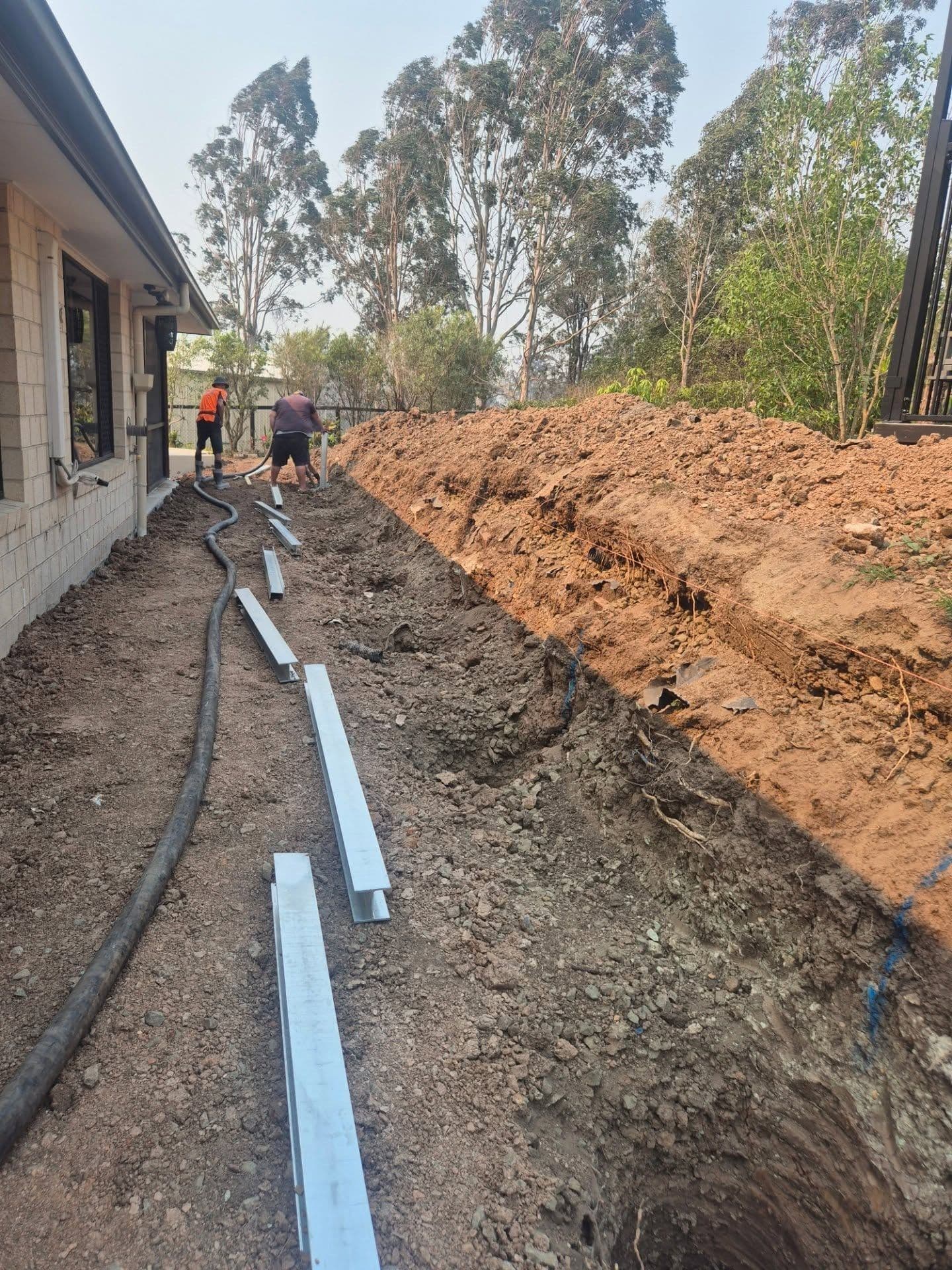
Geofabric, a 100 mm socked ag pipe, then 20 mm drainage gravel. Nobody ever sees it, nobody photographs it, and it’s why the wall’s still straight in ten years.
Read the method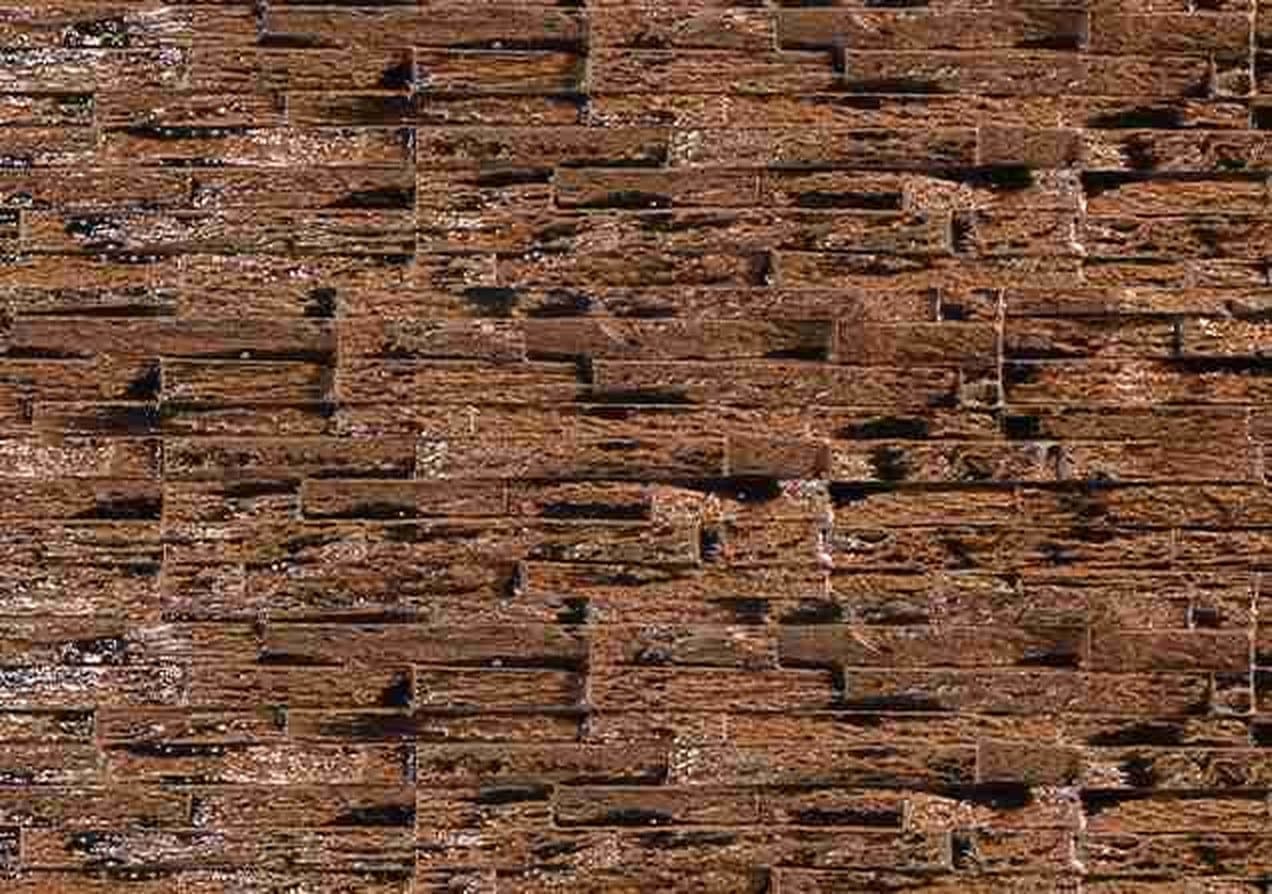
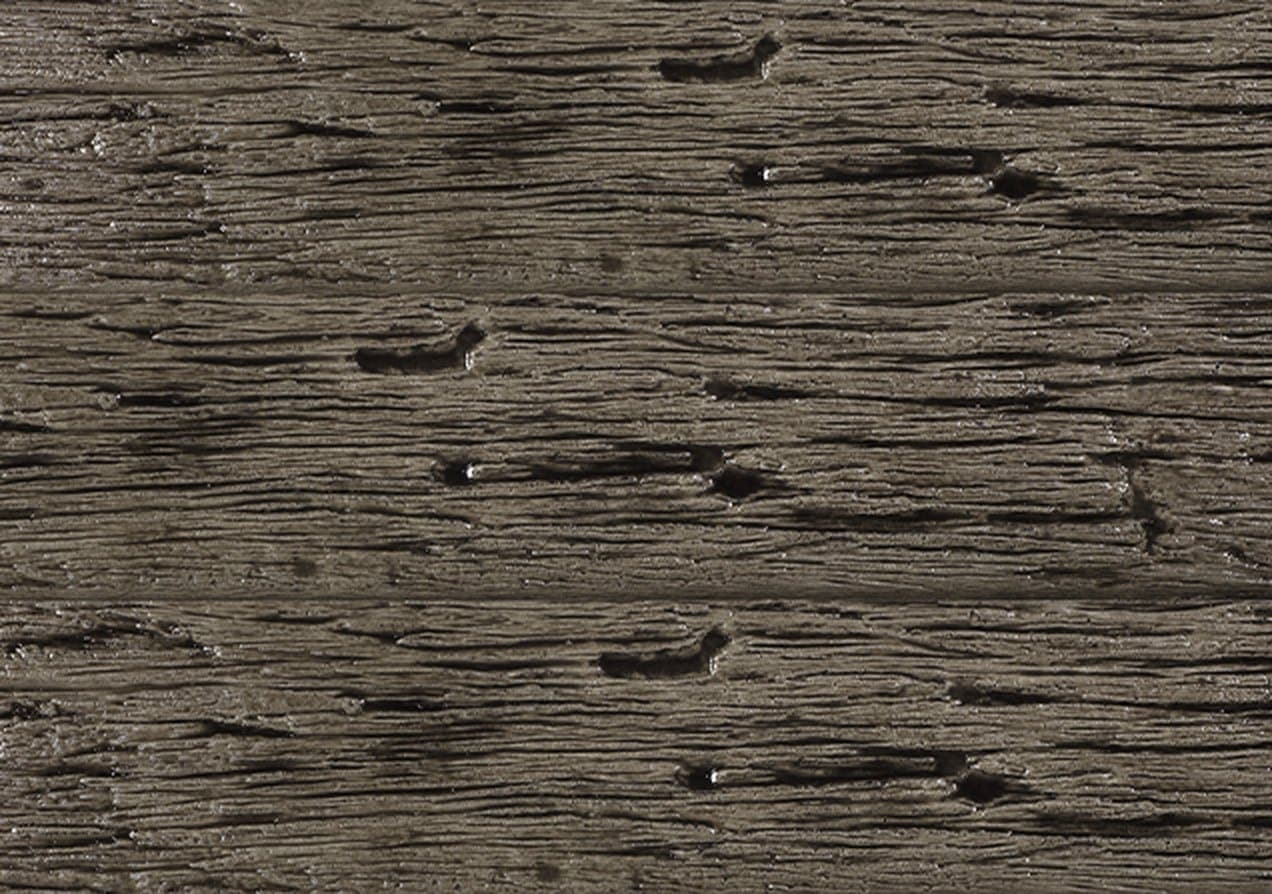
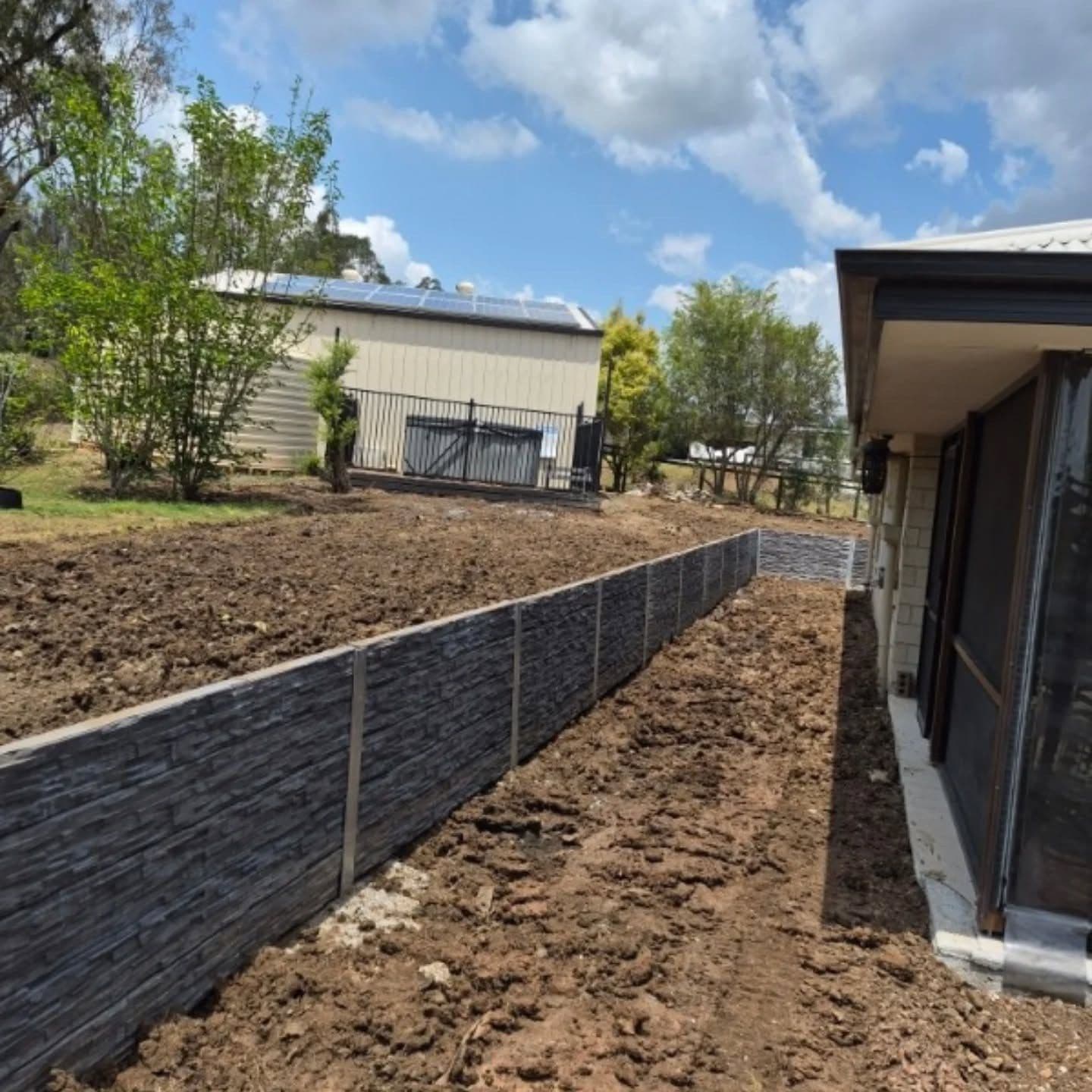
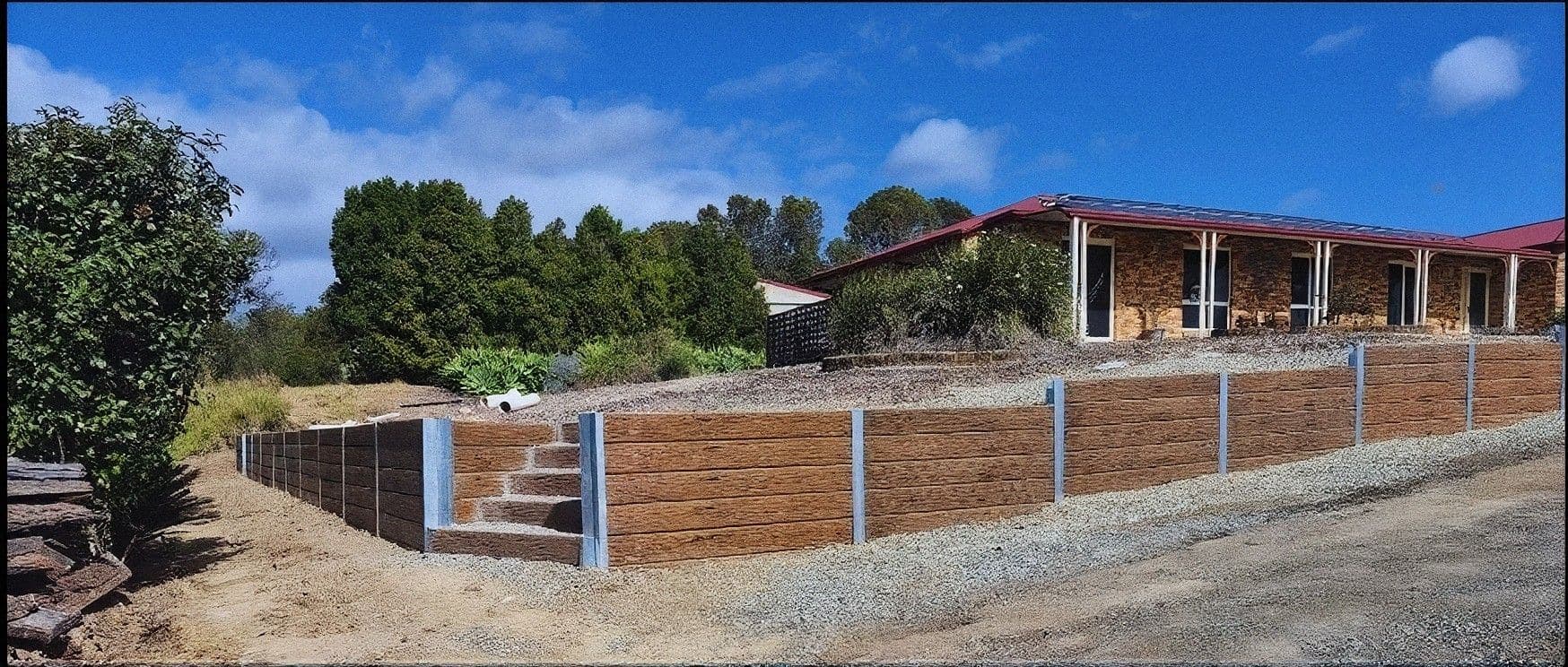
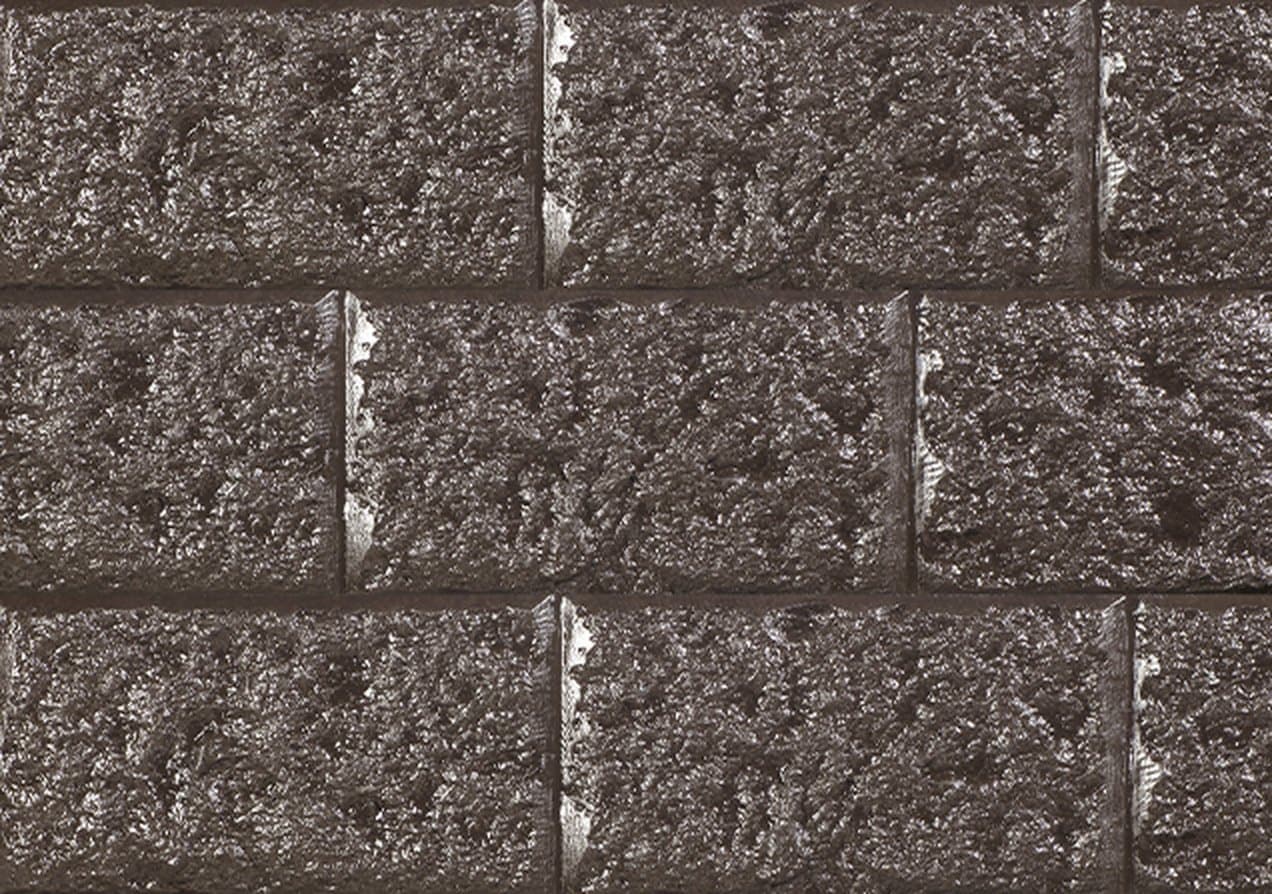
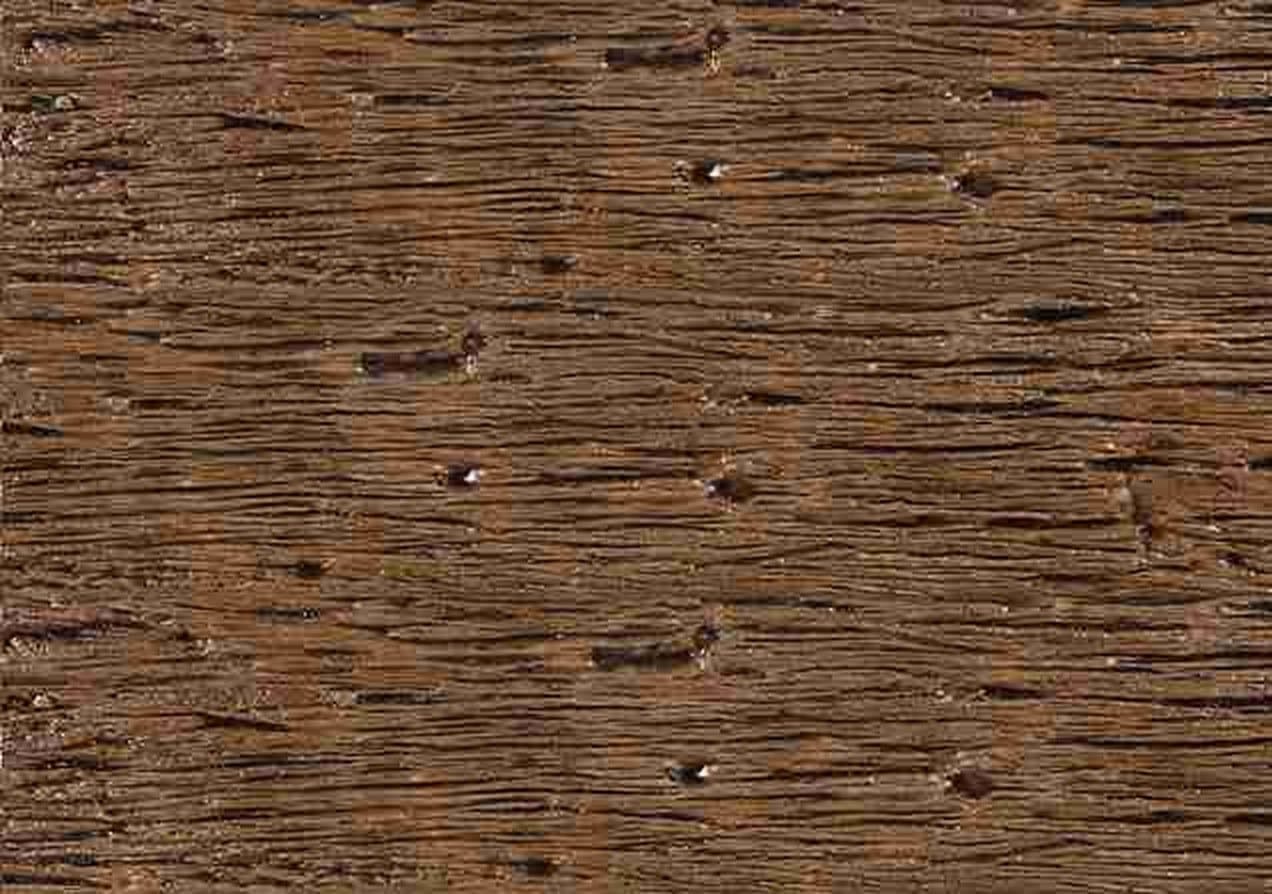
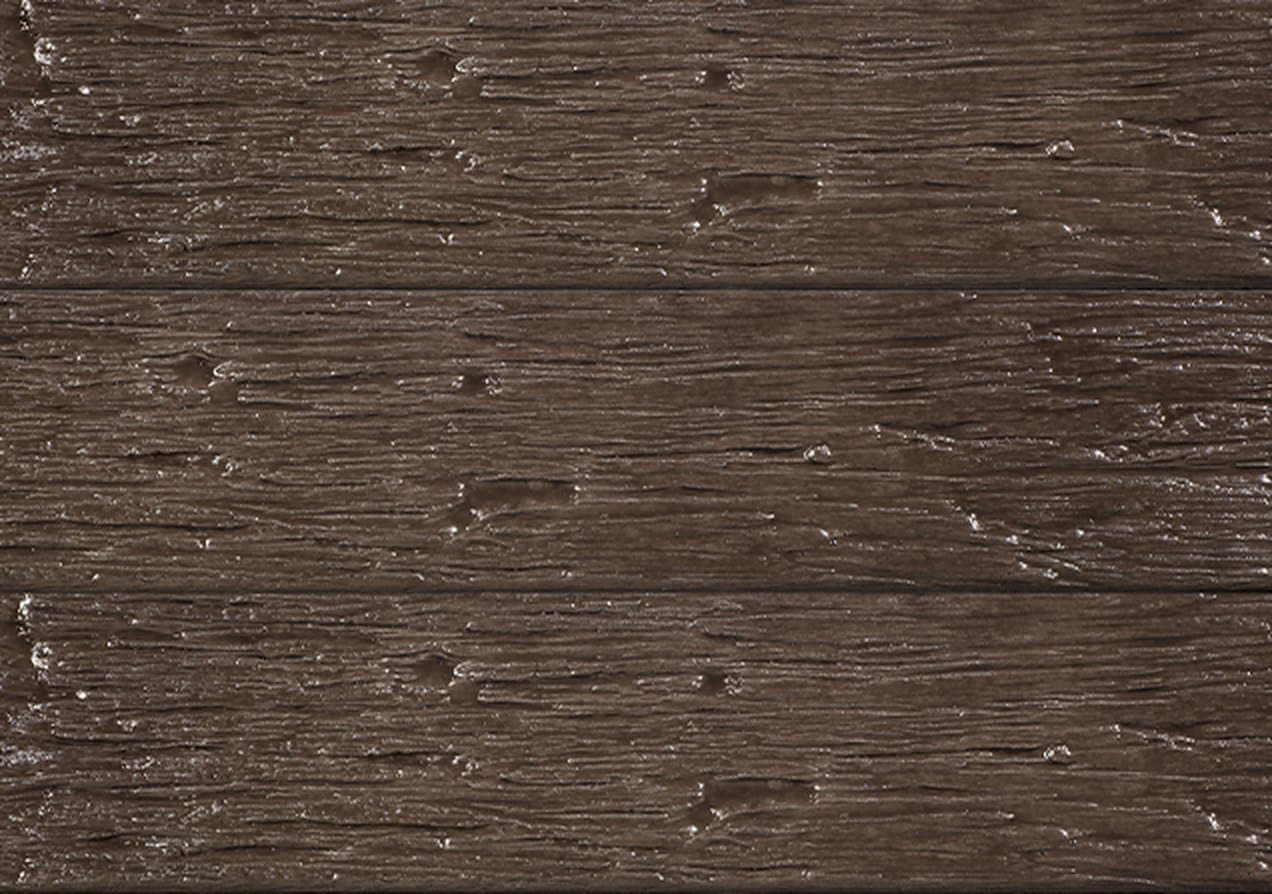
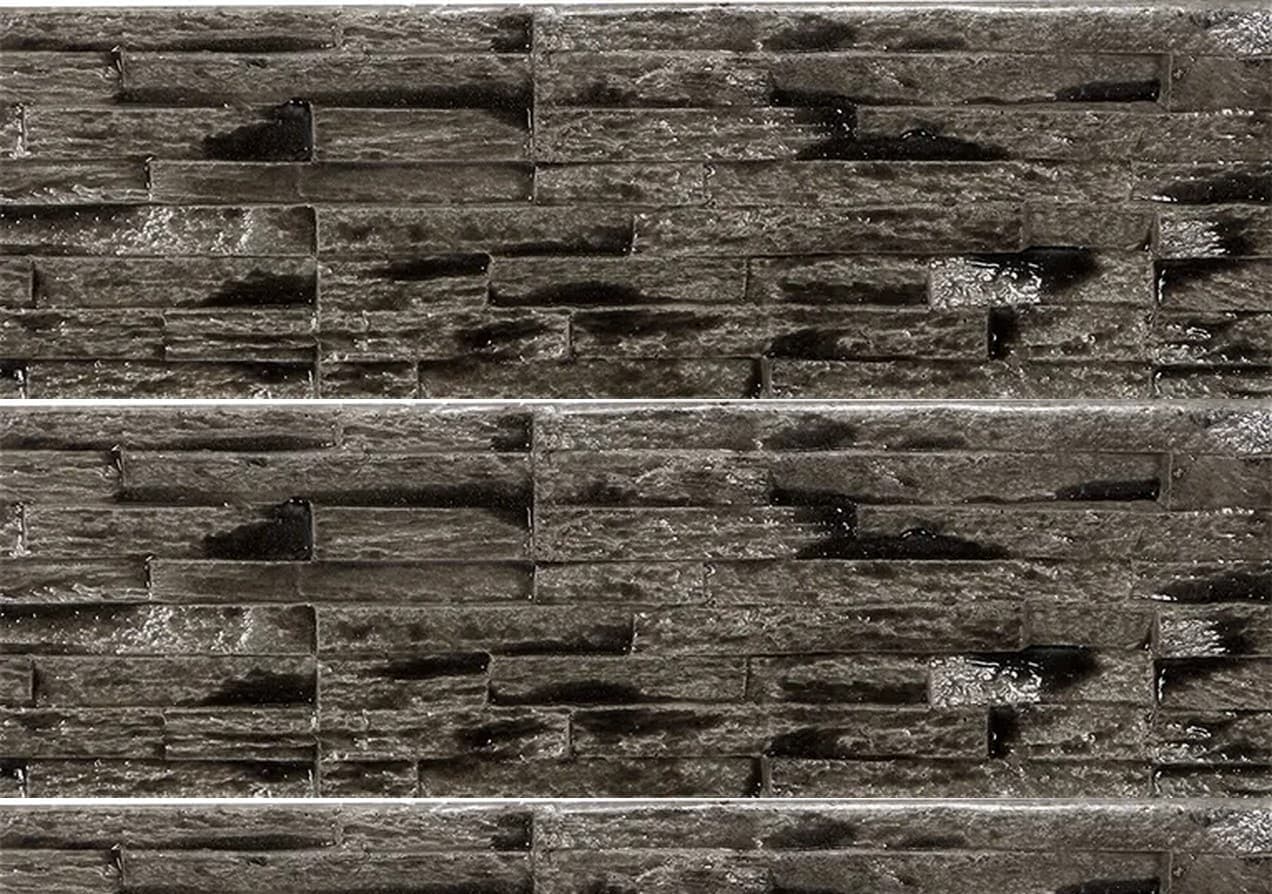
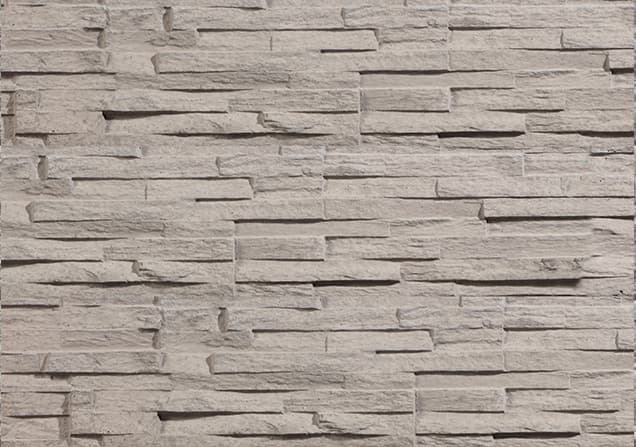
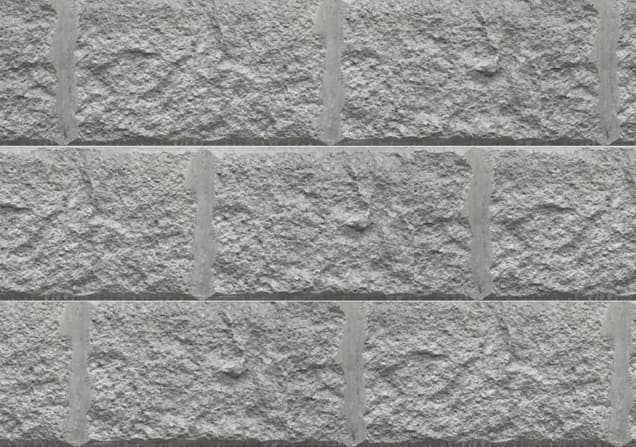
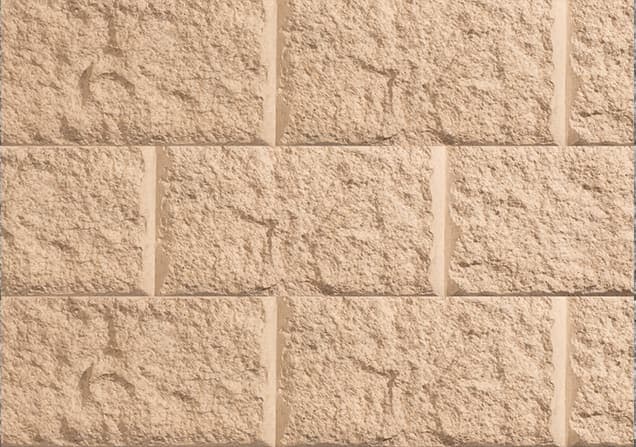
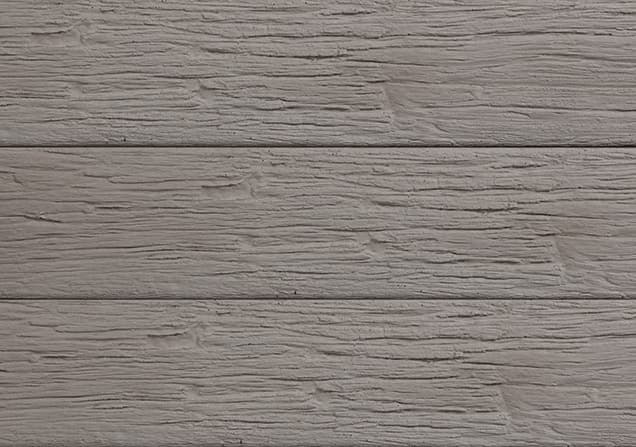
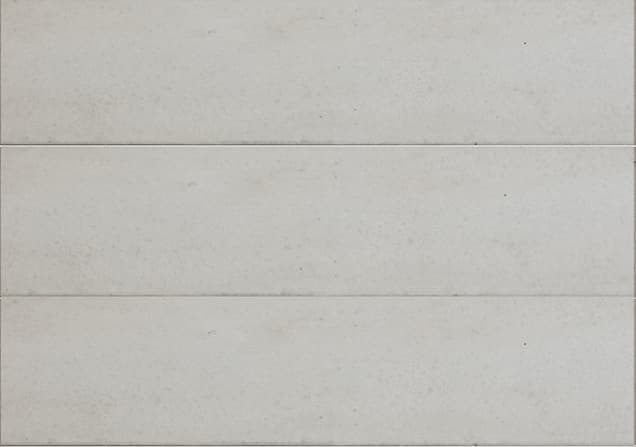
There’s a full range of finishes, from a dark slate face through to a sawn timber grain, in three lengths: 2390 x 200 x 75, 1990 x 200 x 75, 1590 x 200 x 75 millimetres. Colour and grain vary between them, and they all take the light differently through the day. You don’t have to pick one until after you’ve accepted the quote.

The order of work, which is where the money actually goes.
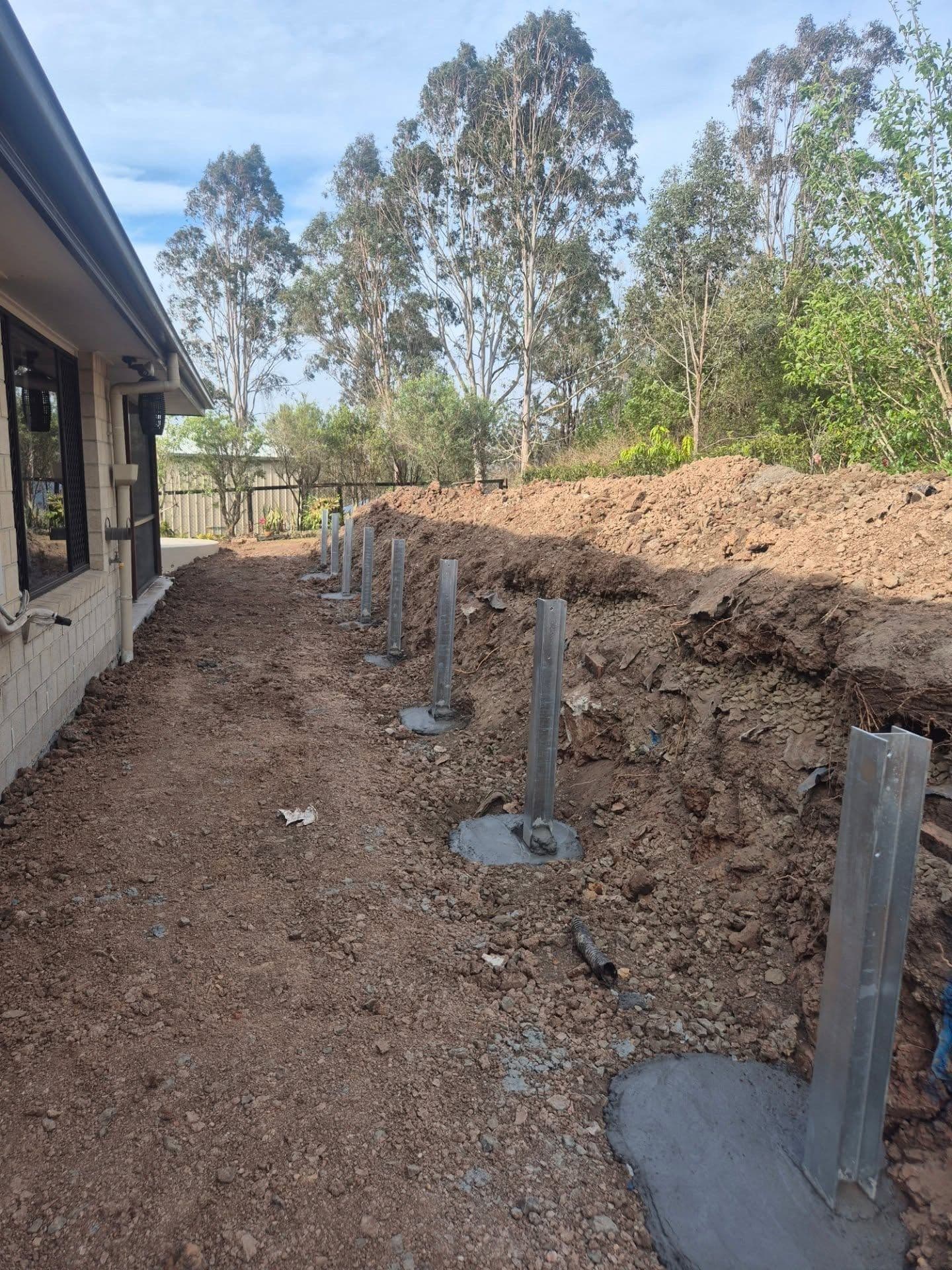
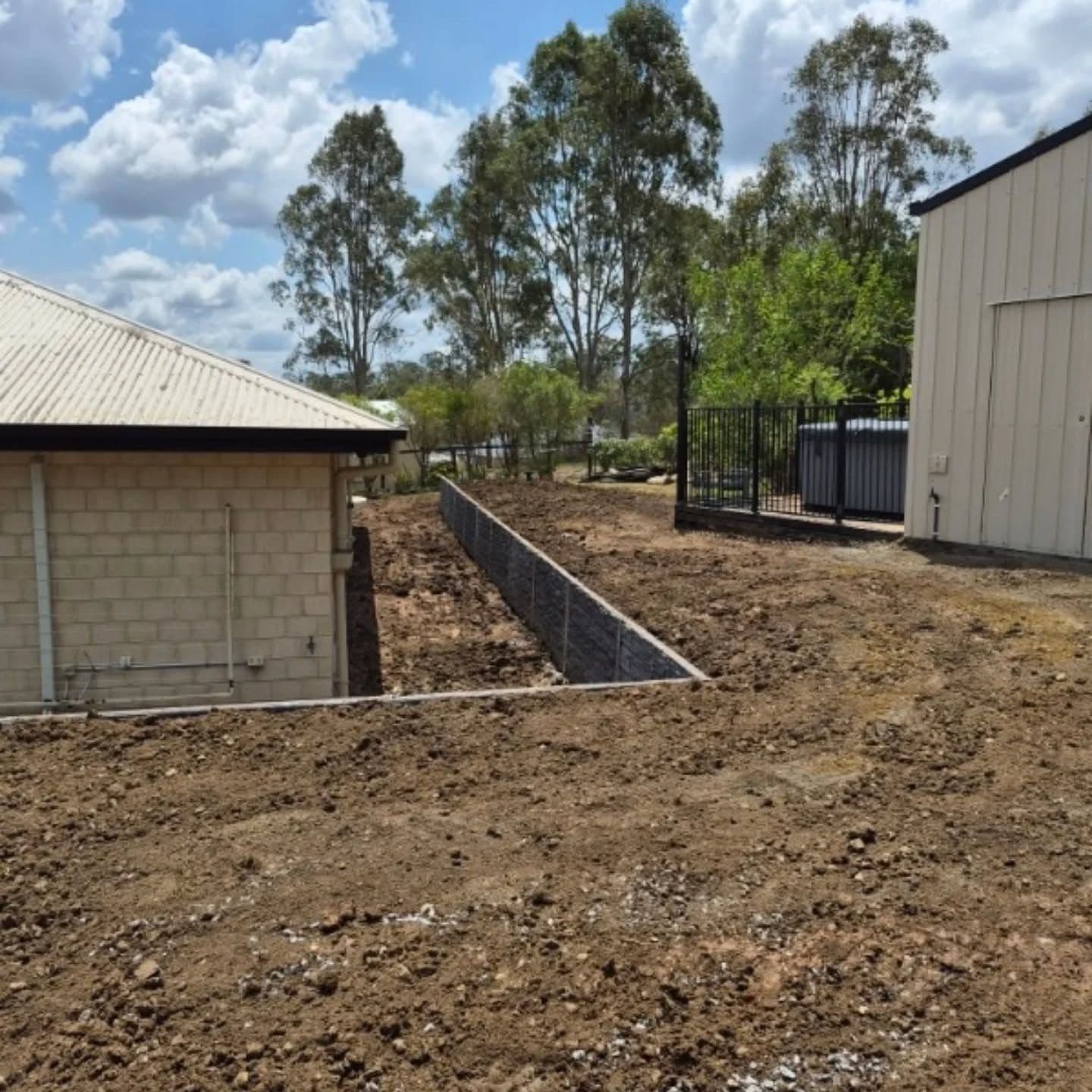
Most of that work is invisible the day the job’s finished. That’s why two quotes for the same wall can be thousands apart and both look identical in the photograph.
Most of the work is finished before a single sleeper is visible.
This is how Jake builds a knock down and rebuild, which is most of what we do. Three of the four stages are hidden the day the job's finished, which is exactly why two quotes can look the same and be thousands apart.
- 01
Old wall out, set out, holes dug
The old wall comes down and gets disposed of. Then Jake sets out, runs string lines for the heights and lengths, marks every post and drills the holes with a 450 millimetre auger.
A lot of cheap quotes hand dig, and hand dug holes rarely get to depth or get the footing a wall needs.
- 02
Posts concreted, then left to set
Galvanised steel posts go in and get concreted with 32 MPa concrete from the plant. Never hand mixed and never rapid set. Then the concrete's left to set before a sleeper goes anywhere near it.
Bays run 1.6 to 2.4 metres depending on the wall.
- 03
Sleepers in
Steel reinforced concrete sleepers from a supplier who warrants them for 50 years. Not seconds, not the hardware store sleepers, and not the brands that skimp on the reinforcing bar inside.
The bar inside the sleeper is the one part of the wall you'll never see, and the part you're actually paying for.
- 04
Drainage behind the wall
Geofabric behind every wall, a 100 millimetre socked ag pipe, and the space behind the sleepers backfilled with 20 millimetre recycled drainage gravel.
We use 100 millimetre socked ag pipe, the size engineered walls are drawn with, even on walls that don't need engineering. Cheap quotes backfill with dirt, which holds water against the wall until the pressure pushes it over.
A lot of what we rebuild is a wall that was built badly the first time.
A sleeper wall isn’t built to hold water back. The drainage behind it is what stops the pressure building.
450 mm auger holes and 32 MPa concrete from the plant. No hand mixing, no rapid set.
Sleeper and post work as a system, so the wall holds a straight line on ground that moves.
50 years on the sleeper, from our supplier.
Often higher than other quotes, because it’s the whole wall system, start to finish.
A cheaper wall that fails costs more in the long run, when it has to come out and be built again.
Not answered here? Ring us on 0480 501 886.
What people ask about how it’s built
Every post hole is drilled with a 450 millimetre auger, and the posts are concreted with 32 MPa concrete from the plant. How deep they go depends on the wall and the ground, which Jake works out on site.
What we never do is hand dig, hand mix or use rapid set. That's where a lot of cheap walls go wrong, and none of it shows the day the wall's finished.
Geofabric behind every wall, a 100 millimetre socked ag pipe, and 20 millimetre recycled drainage gravel filling the space behind the sleepers.
We use 100 millimetre socked ag pipe, the size engineered walls are drawn with, even on walls that don't need engineering.
Because a lot of cheap quotes backfill with dirt. Dirt holds water against the back of the wall, and that water pressure is what pushes walls over.
Gravel lets the water drop to the ag pipe and get away. It's one of the cheapest things to skip and one of the most expensive to put right later.
Why walls failYes. The post holes still have to get to depth, so rock means rock breaking, and that adds time and cost.
If you know there's rock, tell Brittany when you ring. It'll be priced into your quote, and once you've accepted it the price is locked.
Because a post that's loaded before its concrete has set can move, and a wall is only as straight as its posts. So the posts get concreted, the concrete's left to set, and the sleepers go in after.
It's part of why a normal wall takes two to three days rather than one.
No. Concrete sleeper retaining walls only.
No turf, no plants, no garden beds, no fencing, no timber, no rock or sandstone walls. We're retaining wall builders, not landscapers, and the quote is the retaining wall.
1100 millimetres. That's the width our 1.7 tonne machine needs to get through.
If there's no way to get it to the wall, we don't take the job. Tighter access can still work, but it adds machine and operator time, and if Jake has to put the sleepers in by hand, that's in the price too.
Tell us about the block
Six short questions, about two minutes. Brittany rings you back, then Jake comes out and measures it. Quotes are locked for 30 days, with no builder variations.